
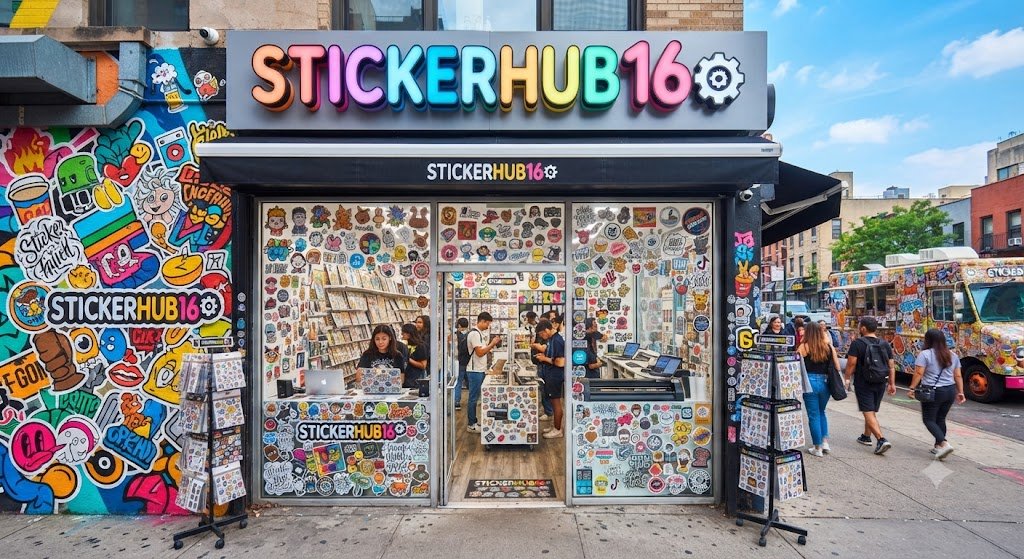
Stickerhub16 is one of those highly specific search terms that appears to point toward a social media username, niche online identity, or commerce-related query. Yet the public evidence is limited. A responsible explanation must therefore separate confirmed facts from speculation instead of manufacturing a biography, follower count, location, or business history.
As of July 15, 2026, search results confirm that the exact name has been indexed on the web, including a TikTok Shop search page and a Scribd document whose AI-generated title mentions the term. However, these results do not establish who owns the name, whether one official profile exists, or whether it represents a creator, sticker seller, fan account, or temporary trend.
Key takeaways:
- The name appears to be an online identifier or search query, but its ownership is not publicly verified.
- Current results do not support claims about a real name, age, location, net worth, or personal history.
- A TikTok Shop keyword page is not the same as an authenticated seller or creator profile.
- Users should verify the exact username, account history, links, reviews, and payment protections before following or buying.
- Publishers should label uncertainty clearly to avoid turning search ambiguity into misinformation.
What Is Stickerhub16?
The most accurate description is that Stickerhub16 is a low-documentation digital identifier. It may be a username, a phrase attached to social content, or a product-search variation. What it is not, based on currently accessible evidence, is a clearly documented public brand with an authoritative website, recognized corporate profile, or independently confirmed owner.
That distinction matters because search engines often index fragments: marketplace keyword pages, scraped trend logs, autogenerated titles, and speculative blog posts. Those fragments can create the appearance of a large online footprint even when no reliable source answers the central questions of identity, ownership, activity, or purpose.
What Public Sources Actually Confirm About Stickerhub16
A TikTok Shop result exists for the phrase “stickerhub16 girl,” but the indexed page behaves like a keyword-driven shopping destination rather than a verified profile biography. Its presence suggests that the term has some relationship to TikTok search or product discovery, but it does not prove that the name belongs to a registered shop, a specific seller, or a creator account.
A Scribd page also uses an AI-enhanced title connecting the identifier with search trends. The underlying document, however, is a long list of unrelated search terms and timestamps; its visible content does not provide a dependable profile, business description, or ownership record for the name. That gap is crucial when judging the reliability of secondary pages.
Is Stickerhub16 a TikTok Account, Brand, or Online Store?
The social media interpretation is plausible because the term follows a common username pattern: a descriptive word, a community-related word such as “hub,” and a number. The appearance of the phrase in TikTok-related search results strengthens that possibility, but a plausible interpretation is not the same as confirmation.
The commerce interpretation is also possible because “sticker” directly describes a product category, while “hub” often appears in store or community names. Still, no authoritative source located during the research establishes a legal business name, official product catalogue, customer-service address, or verified storefront connected specifically to the handle.
The Username Interpretation
If this is a social handle, the number “16” may simply distinguish it from an unavailable username, reference a personal detail, or have no public meaning at all. Readers should not infer an age, birth year, location, or identity from the number because usernames rarely provide reliable biographical evidence.
The Marketplace Interpretation
If the name is connected to sticker sales, the proper verification target is the individual seller page—not a broad marketplace keyword page. Buyers should look for seller history, recent reviews, original product photos, shipping terms, return conditions, and a payment process that remains inside the marketplace.
Why Is Stickerhub16 Being Searched?
Niche usernames often attract searches after a video, comment thread, repost, marketplace listing, or recommendation exposes the handle to a wider audience. People may search the name to relocate an account, identify a creator, find a product, confirm whether a profile is authentic, or understand a reference they encountered elsewhere.
The query also benefits from what can be called an information-gap effect. When search results mention a term but fail to explain it clearly, curiosity increases. New pages may then repeat the name and add unsupported claims, amplifying its visibility without improving factual accuracy.
How to Find the Official Stickerhub16 Account
Start inside the platform where you first encountered the term. Search the exact spelling, compare usernames character by character, and open the profile from the original video, comment, product card, or shared link whenever possible. This reduces the chance of landing on a copycat account that adopted a similar name after the term gained attention.
Next, compare the profile’s visible history. Look for consistent posting themes, older uploads, matching branding, linked websites, cross-platform usernames, and interactions that predate the current search interest. A recently created profile with copied media, urgent sales language, or inconsistent identity signals deserves additional scrutiny.
Useful verification searches include:
"Stickerhub16"for exact-match results- Add
@before the handle to find profile mentions - Add
reviewto find user experiences - Add
scamorcomplaintto surface risk signals - Use
site:tiktok.comto narrow results - Use
-site:tiktok.comto find independent references
How to Evaluate Whether a Stickerhub16 Profile Is Authentic
A TikTok verified badge appears beside the account name in search results and on the profile. TikTok specifically warns that a check mark displayed elsewhere, such as inside a bio or profile image, is not an official verification badge. Verification indicates that TikTok has confirmed the account represents the person, business, or entity it claims to represent.
The absence of a badge does not automatically make an account fake, particularly when dealing with small creators or niche sellers. Instead, authenticity should be assessed through a combination of signals: account age, content consistency, original media, transparent contact details, external references, realistic engagement, and whether linked domains or stores use the same identity.
Check the Profile History
Scroll beyond the newest posts. A legitimate, long-running account usually demonstrates continuity in its visual style, subject matter, voice, and community interactions, while an impersonator may have only a few recent uploads or a sudden shift from unrelated content to aggressive promotions.
Check Cross-Platform Consistency
Search the same handle on major platforms and compare bios, logos, contact details, and linked websites. Matching information across independently maintained profiles is stronger evidence than a single page repeating its own claims, although sophisticated copied profiles can still imitate these details.
How to Judge Stickerhub16 Shopping Listings Safely
For any listing connected to the name, focus on the actual seller rather than the attractiveness of the product image. The U.S. Federal Trade Commission advises marketplace buyers to examine recent ratings, read reviews critically, confirm contact information, review shipping and return terms, and avoid relying on star ratings alone because reviews can be misleading.
Payment method matters as well. The FTC recommends keeping transaction records and explains that credit-card charges can often be disputed when an item never arrives, arrives damaged, or differs from what was ordered. A seller who pushes payment outside the marketplace, requests gift cards, or demands unusual transfers creates unnecessary risk.
Before purchasing, verify that:
- The seller profile has a meaningful transaction history.
- Product photos appear original and show the actual item.
- Pricing is realistic for the material, size, and quantity.
- Shipping times, tracking, refunds, and returns are stated clearly.
- Checkout remains on the recognized platform.
- Messages, receipts, and listing screenshots are saved.
- Customer reviews describe specific products and experiences.
- The seller answers reasonable questions without applying pressure.
Privacy, Impersonation, and Account-Safety Concerns
Highly specific usernames can attract impersonators because users searching quickly may click the first similar account they see. Watch for substituted characters, extra punctuation, added underscores, copied profile photos, and bios claiming that an older account was “hacked” without providing any corroborating evidence.
Never share login codes, passwords, banking details, or identity documents through direct messages. TikTok provides reporting options for user accounts and impersonation, while its safety guidance also warns users about fraudulent messages and phishing attempts.
Why Some Stickerhub16 Articles Should Be Treated Cautiously
One indexed article about the term uses possibility-based language, suggesting that the name “could be” a TikTok personality or something else. That framing reveals the central weakness: the page explores theories rather than documenting a confirmed identity. It may rank for the query, but ranking alone does not make its claims authoritative.
Another source gives the term prominence through an AI-generated document title even though the visible document body is essentially a miscellaneous search log. This is a valuable reminder that title relevance can exceed source relevance. Readers should inspect the underlying evidence rather than trusting a headline or search snippet that merely repeats the keyword.
A Better Evidence Framework for Researching Stickerhub16
Use four confidence labels when evaluating claims. “Confirmed” should require a first-party profile or reliable independent source. “Supported” may describe a claim backed by several consistent signals. “Plausible” means the interpretation fits available clues but remains unverified, while “unsupported” applies when a page states personal or commercial details without evidence.
Under this framework, the existence of the exact phrase in search results is confirmed. Its connection to TikTok-related discovery is supported. The idea that it is a creator or sticker seller is plausible. Claims about the owner’s name, age, residence, earnings, relationships, or private life remain unsupported unless direct, credible documentation emerges.
What Content Creators and SEO Publishers Can Learn
The search opportunity surrounding this term is not permission to invent an answer. A trustworthy page can outperform shallow competitors by documenting the evidence trail, explaining uncertainty, timestamping the research, and showing readers how to verify future information themselves. That creates genuine information gain rather than simple keyword repetition.
Publishers should update the page when a first-party profile, official storefront, interview, or verified cross-platform identity becomes available. Google’s own search guidance encourages users to assess source credibility, investigate what other sources say, and consider publication dates—especially when little reliable information exists.
How E-E-A-T Applies to an Ambiguous Search Term
Experience can be demonstrated by showing readers how social profiles, usernames, and marketplace listings are actually verified. Expertise comes from distinguishing an indexed mention from an authenticated identity. Authoritativeness requires reliable primary or independent sourcing, while trust depends on acknowledging what has not been established.
For a topic such as this, uncertainty is not a weakness in the article. Pretending certainty would be the weakness. A well-researched page should clearly state the research date, identify evidence limitations, avoid invasive speculation, and correct earlier wording when stronger documentation becomes available.
Common Red Flags in Low-Quality Profile Articles
A weak article may provide a real name, nationality, age, relationship status, occupation, or income without linking those claims to a first-party statement or credible publication. It may also treat an autogenerated search result, copied biography, username directory, or unrelated PDF as proof of identity.
Another warning sign is circular sourcing. This happens when several websites repeat the same claim, but every version ultimately traces back to one unsourced article. Repetition may increase apparent confidence, yet it does not create independent verification or demonstrate that the original statement was accurate.
Treat the following claims cautiously unless properly sourced:
- Exact follower or engagement figures without a live profile date
- Estimated earnings or net-worth figures
- Personal relationships and family information
- Home city, school, workplace, or precise location
- Claims that the profile is “famous” or “viral”
- Product-quality guarantees based on promotional descriptions
- Statements that an account is official without platform confirmation
How to Monitor Future Stickerhub16 Updates
Save the exact username spelling and periodically repeat exact-match searches across search engines and relevant social platforms. Look specifically for first-party statements, consistent profile links, platform verification, archived posting history, reputable interviews, or a business website with transparent ownership and contact information.
Do not treat repetition as confirmation. Ten low-quality pages may all copy the same unsupported sentence from one original source. A single authentic profile linked consistently across multiple platforms can be more valuable than dozens of derivative articles containing no primary evidence.
Conclusion: What Should You Do Next?
Stickerhub16 is best understood as a niche online identifier with visible search interest but an incomplete public record. Current sources suggest a TikTok or shopping-related context, yet they do not establish a verified owner, official biography, or confirmed commercial operation. The honest answer is narrower than many readers expect, but it is also more accurate and useful.
Your next step is simple: return to the original platform, locate the exact account or listing, compare its history and cross-platform links, and avoid making purchases until the seller’s identity, policies, and payment protections are clear. Reassess the evidence whenever an official source, verified profile, or transparent storefront appears.
Frequently Asked Questions About Stickerhub16
The following answers address the most likely search intentions without presenting assumptions as established facts. Because usernames and marketplace listings can change quickly, readers should compare these answers with the current platform profile before making a decision.
Details such as follower counts, available products, usernames, and account status may become outdated. The verification principles below remain useful even when the profile changes its display name, content niche, or selling activity.
What does Stickerhub16 mean?
Stickerhub16 appears to be a constructed online name combining “sticker,” which may refer to decorative or digital stickers, “hub,” which suggests a central page or collection, and the number 16. No credible public source currently confirms why the owner chose the name, so deeper interpretations should be treated as speculation.
Is Stickerhub16 a real person?
There is not enough reliable public evidence to identify the handle as a specific real person. It may be a username operated by an individual, a brand-style account, a seller name, or a search phrase. Without a verified profile or credible first-party statement, personal details should not be presented as fact.
Is Stickerhub16 an official TikTok account?
TikTok-related search results exist, but the available indexed pages do not prove that one particular profile is official. Search the exact handle inside TikTok, check whether the account links consistently to other profiles, and remember that an official verification badge appears beside the username—not merely inside the bio.
Can I safely buy stickers from Stickerhub16?
Safety depends on the specific seller and checkout process, not the keyword alone. Review recent buyer feedback, seller history, original photos, contact information, shipping terms, and return policies. Keep payment inside a trusted marketplace and preserve receipts and messages in case you need to dispute the transaction.
Why is there so little reliable information about the name?
The term may belong to a small, new, renamed, inactive, or platform-specific account that has not developed a broad public footprint. Google notes that limited results can mean a source is new or not widely documented, so sparse coverage should increase caution rather than encourage writers to fill information gaps with guesses.
