
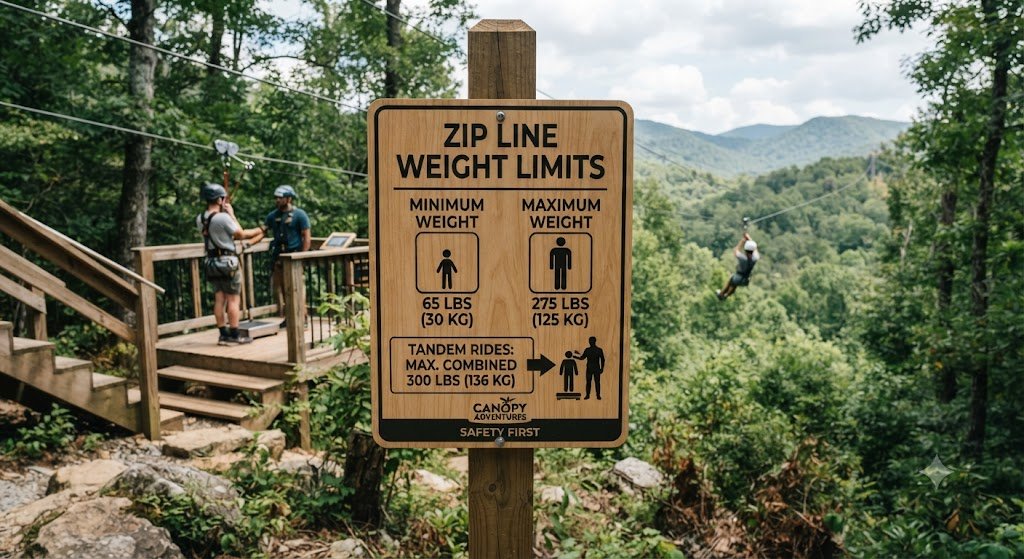
The weight limit for zip line adventures is one of the most important safety factors every rider should understand before stepping onto a platform. Whether you are planning a family adventure, visiting an outdoor park, or booking a professional canopy tour, knowing how weight restrictions work helps ensure a safer and more enjoyable experience.
Many people assume that zip line weight limits are only based on the rider’s body weight. In reality, operators consider several factors, including cable strength, harness design, braking systems, trolley capacity, weather conditions, and course engineering.
A zip line is carefully designed with specific load limits. Going beyond those limits can affect how the equipment performs and may create unnecessary safety risks.
Before booking a ride, always check the operator’s requirements. The weight limit for zip line courses can vary significantly depending on the type of system, location, and manufacturer specifications.
What Is the Average Weight Limit for Zip Line Rides?
The average weight limit for zip line experiences usually falls between 60 and 275 pounds (27 to 125 kilograms). However, there is no universal standard that applies to every zip line.
Different courses are built for different purposes.
For example:
- Small recreational backyard zip lines may support around 100–200 pounds.
- Adventure park zip lines often allow riders between 60 and 250 pounds.
- Professional canopy tours may have limits around 250–275 pounds or higher depending on equipment.
- Commercial extreme zip lines may use specially engineered systems designed for heavier loads.
The exact limit depends on the complete zip line system rather than just one component.
A professional operator does not simply ask, “How much does the rider weigh?” They evaluate the entire setup, including:
- The rider’s weight
- Harness and helmet weight
- Trolley capacity
- Cable tension
- Starting height
- Landing zone design
- Braking method
- Safety margins
This is why two zip lines located only a few miles apart may have completely different weight restrictions.
Why Does a Zip Line Have a Weight Limit?
A zip line weight limit exists because every part of the system has a maximum safe operating capacity.
A zip line works by transferring the rider’s weight through multiple connected components. The force is distributed between the cable, anchors, trolley, harness, and braking equipment.
If the total load becomes too high, several performance issues can occur.
Cable Stress and Structural Pressure
The steel cable is one of the most important parts of the system. Although zip line cables are extremely strong, they are designed with specific engineering calculations.
A heavier load creates:
- More cable tension
- Greater stress on anchor points
- Increased movement during the ride
- Higher forces during braking
Professional installations include safety margins, but those margins are not unlimited.
Braking System Performance
The braking system is another major reason behind the weight limit for zip line restrictions.
Many zip lines use:
- Spring brakes
- Magnetic braking systems
- Friction brakes
- Hand-controlled braking methods
A heavier rider carries more momentum while traveling down the cable. This means the braking system must absorb more energy before the rider reaches the landing platform.
If the system is not designed for higher loads, stopping distance may increase.
Harness and Safety Equipment Ratings
The harness is the direct connection between the rider and the zip line system.
Manufacturers test harnesses based on specific weight ranges. A harness that fits incorrectly or exceeds its rated capacity may not provide proper support.
Important equipment includes:
- Full-body harness
- Safety helmet
- Carabiners
- Trolley attachment
- Backup connection systems
Every component must work together as one safety system.
How Zip Line Operators Determine Weight Limits
Professional zip line companies use engineering data and manufacturer guidelines to establish safe rider requirements.
The weight limit for zip line operations is usually determined by several measurements.
1. Equipment Manufacturer Specifications
Every major component comes with a rated capacity.
Operators check:
- Cable specifications
- Harness ratings
- Trolley strength
- Anchor system limits
- Brake capacity
The lowest-rated component often determines the maximum allowed weight.
2. Course Design and Length
The design of the zip line also affects weight restrictions.
A short, low-speed zip line may handle different loads compared with a long, high-speed course.
Factors include:
- Cable length
- Cable angle
- Elevation difference
- Rider speed
- Landing area
A longer zip line creates more momentum, especially when riders travel at higher speeds.
3. Weather Conditions
Weather can influence zip line safety.
Strong winds, rain, ice, and extreme temperatures may affect:
- Cable behavior
- Rider control
- Braking performance
- Equipment condition
Some operators may temporarily reduce capacity limits during unusual conditions.
Does Height Matter More Than Weight on a Zip Line?
Many people wonder whether height affects zip line requirements. While height is sometimes considered, weight is usually the primary measurement.
A taller person may weigh less than a shorter person, while a shorter person may exceed the maximum capacity.
However, height can matter because harnesses and safety equipment need proper adjustment.
Operators may consider:
- Minimum height requirements
- Maximum reach requirements
- Harness fitting ability
- Rider comfort
A person can meet the weight requirement but still be unable to participate if the equipment cannot be fitted correctly.
Minimum and Maximum Weight Requirements for Zip Lines
Most people focus on the maximum weight limit, but many zip lines also have minimum weight requirements.
Minimum Weight Limits
Some zip lines require riders to meet a minimum weight because gravity controls movement.
A rider who is too light may:
- Move too slowly
- Stop before reaching the platform
- Require assistance from staff
Many courses set minimum weights between 40 and 60 pounds, although this varies.
Maximum Weight Limits
The maximum weight limit for zip line rides protects both riders and equipment.
Common maximum limits include:
- 200 pounds
- 250 pounds
- 275 pounds
- 300 pounds on specialized systems
Always confirm the exact limit before arriving because operators may update requirements based on equipment or safety policies.
Can Someone Over the Weight Limit Still Ride a Zip Line?
No. If someone exceeds the posted weight limit for zip line, operators generally cannot allow participation.
This rule is not about excluding riders. It is based on safety calculations and equipment certification.
Professional guides are responsible for following manufacturer instructions and operating standards.
Ignoring weight restrictions could affect:
- Insurance requirements
- Equipment warranties
- Safety procedures
- Rider protection
A reputable zip line company will always prioritize safety over allowing an unsafe ride.
